Germans tend to ask boring but sensible questions before buying a meme coin: Is the platform supervised? Does my Sparkasse or N26 transfer go through? And what does the Finanzamt say a year from now? That is a healthier checklist than most meme-coin guides give you, so we built this page around it. If you just want the generic, global walkthrough, start with how to buy WIF; this page covers the German specifics.
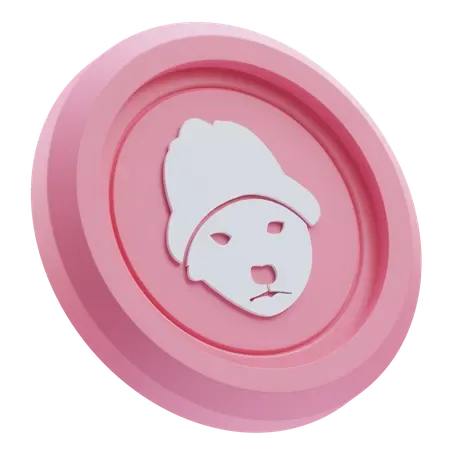
dogwifhat (WIF) is a Solana-based meme token with a Shiba Inu in a pink knitted hat as its mascot. It has no native staking, no revenue share and no promised utility, and its price history (ATH $4.83 on 31 March 2024, ATL $0.00155464 on 12 December 2023, per CoinGecko) shows what "high risk" looks like in real life.
Who supervises what: BaFin, MiCA and the passport
Germany used to have its own regime: the crypto custody business (Kryptoverwahrgeschaeft) was a regulated financial service under the Banking Act (KWG), and BaFin issued licences for it. That national regime has been overtaken by the EU's Markets in Crypto-Assets Regulation, MiCA. The rules for crypto-asset service providers (CASPs) started to apply on 30 December 2024. Since then, an exchange, broker or custodian serving EU customers needs a CASP authorisation from the supervisor of an EU country, and that authorisation is valid across the bloc via a passport.
For you as a German user, that creates two legitimate paths:
- A platform authorised directly by BaFin. The firm's German entity holds the CASP authorisation.
- A platform authorised elsewhere in the EU (for example by the Austrian FMA, the Central Bank of Ireland, the Dutch AFM or Luxembourg's CSSF) and passported into Germany.
Both are fine. What is not fine is a platform with no EU authorisation that still markets to Germany. The authoritative places to check are BaFin's company database and ESMA's MiCA register, which lists CASPs by legal entity. Third-party "licence tracker" websites exist and are handy for orientation, but they disagree with each other, so use them to find the entity name and then confirm it on the official register. One more detail: an authorisation lists specific services (custody, exchange, trading platform, execution and so on), and a firm may only offer what it is authorised for.
Practical test in 60 seconds. Find the legal entity in the platform's imprint (Impressum), search that exact name in the ESMA register or BaFin database, and check that the services you need (exchange/execution, custody) are listed.
The platforms German users actually look at
We are not going to rank them, and we have not verified each firm's current register entry ourselves, so this is a map, not a recommendation.
Bitpanda. A Vienna-based broker with strong German-speaking roots. Its public price page for dogwifhat describes a standard flow: register, verify identity via a partner, deposit, buy. Its pages list card and PayPal among payment options and carry a warning that crypto is highly volatile. Bitpanda's group has authorisations in more than one jurisdiction, and one tracker lists a BaFin-supervised entity, but the legal entity serving you depends on your account; check it. Our Bitpanda review goes into fees and the difference between its simple buy flow and the more advanced trading interface.
Kraken. A US-founded exchange with a large European customer base. Its WIF buy page advertises many WIF trading pairs and says you can use its Convert feature if there is no direct pair; it also lists EUR among supported fiat currencies. We could not confirm from Kraken's own announcements that a direct WIF/EUR pair exists, so look at the market list in your account. Trackers disagree on which EU regulator authorises Kraken (Ireland's central bank is the most commonly cited), so check the register. See our Kraken review.
Bitcoin.de. The classic German peer-to-peer marketplace. It has traditionally focused on a small selection of large coins rather than meme tokens, and we found no confirmation that WIF is available. If you are specifically hunting for WIF, you will probably end up elsewhere. Its regulatory status under MiCA is something we could not verify here.
Bitvavo and other EU exchanges. Dutch exchange Bitvavo serves German customers in euros. Its status is covered on our Bitvavo review and the Netherlands page.
Binance. Secondary reports in the summer of 2026 say Binance stopped serving EU users around the MiCA deadline for lack of an EU authorisation. We could not confirm that from a primary source, so check Binance's own notices before assuming you can use it in Germany. Whatever the answer, if an account you hold elsewhere is affected, withdraw your coins to a wallet you control.
CEX.IO, another long-running exchange (founded 2013) that holds licences in several jurisdictions, also appears in German search results. Whether it serves your account and which entity it uses depends on its own legal page, so read that and the relevant regulator register instead of relying on us.
Want a second quote before you commit? Compare the WIF rate on another venue.
Grab your WIF →SEPA: the part Germans actually enjoy
Euro rails are a genuine advantage here. SEPA transfers are standard bank transfers in euros, so your normal online-banking transfer from a Sparkasse, Volksbank, Commerzbank, DKB, ING, N26 or similar works. A few practical points:
- SEPA Instant arrives within seconds if both banks participate, and the EU has been pushing banks to support it; look for it in your banking app. A standard SEPA credit transfer usually lands after one banking day.
- Name and IBAN match. Reputable platforms only accept deposits from an account in your name. If the sender name differs, the money can get stuck or refunded.
- Reference. Many platforms give you a payment reference. Copy it exactly.
- Card and PayPal. Bitpanda's pages mention these, and they are usually more expensive than SEPA. Compare the effective price, not the headline fee.
- Bank friction. Some German banks block or question transfers to crypto platforms. If yours does, a short call usually clears it; do not switch to unknown intermediaries.
For a quick sanity check of what a euro amount should roughly buy, use the WIF to euro calculator as a guide, but remember that the fill price on an exchange includes spread and fees.
German tax basics: Haltefrist, Freigrenze and swaps
This is general information, not tax advice; tax advisors (Steuerberater) exist for a reason.
For private individuals, the Federal Ministry of Finance (BMF) treats crypto-assets as economic assets, and the sale of such an asset can be a private sale transaction (privates Veraeusserungsgeschaeft) under section 23 of the Income Tax Act (EStG). The BMF published a detailed circular on the income-tax treatment of crypto-assets on 6 March 2025, and you can find current material on bundesfinanzministerium.de.
The mechanics, as widely summarised by advisers and based on that framework:
- One-year holding period. If you sell after more than a year since acquisition, the gain is generally outside section 23 EStG and so not taxed. Within the year, gains are taxable at your personal income tax rate (there is no flat 25 percent capital-gains tax for crypto in the private sphere).
- Freigrenze of 1,000 euro. Since 2024 the threshold for total private-sale gains in a calendar year is 1,000 euro. Reach it and the entire gain is taxable. It is a Freigrenze, not an allowance. Gains from other private sales, such as collectibles or gold, count in the same pot.
- Swaps are disposals. Trading SOL for WIF counts as selling SOL. If SOL went up since you bought it and you held it under a year, you might owe tax even though no euro ever hit your bank account.
- FIFO. The BMF circular applies first-in-first-out for matching coins sold to coins bought, per advisers' summaries; some courts have accepted other methods, so ask your adviser if the amounts are large.
- Losses from private sales can generally be offset only against private-sale gains.
- Documentation. You need purchase dates, euro costs, sale proceeds and fees. Exchanges give exports; wallets do not, so keep your own notes for on-chain moves.
The summaries we read were from tax-adviser websites, not the BMF text itself, so rely on the official circular, the Federal Central Tax Office (BZSt) for administrative questions and your local Finanzamt for the final answer. Private sales are reported on the relevant annex of your income tax return (the "SO" annex is the one German advisers usually cite).
Do not park everything on the platform "for the year". The holding period runs from the acquisition date; moving coins from an exchange to your own wallet is normally not a sale, but moving them in a way that looks like a disposal can raise questions. Keep records of transfers between your own addresses.
Self-custody: where your WIF should end up
WIF is a Solana SPL token, so you need a Solana-compatible wallet such as Solflare. Our wallet guide compares options and explains seed phrases in plain language. Before every withdrawal, compare the mint address with the one listed on our contract address page; fake tokens with the same name and logo are common. Also keep a small SOL balance for network fees if you plan to move WIF later.
A note on custody under MiCA: platform custody is regulated, and your assets are supposed to be segregated from the platform's own funds, but that does not make them risk-free. Exchanges can still be hacked, suspended or wound down, and EU consumer protection does not cover price losses. If you are not trading actively, self-custody is simply less to worry about.
Scams and German-language pitfalls
- "Staking WIF with 12 percent per month." No native WIF staking exists; see WIF staking and earning.
- Fake BaFin warnings or "recovery services". After a loss, scammers contact victims offering to recover funds for an upfront fee, sometimes using fake BaFin or police letterheads. BaFin does not charge for such help.
- Cloned Bitpanda or Kraken sites advertised through search ads and social posts. Type the address or use the official app.
- Voice or video "advisors" on messenger apps who promise coaching in exchange for deposits. Walk away.
- Phishing e-mails posing as exchanges ("your account will be suspended"). Do not click; log in directly.
Our page on whether dogwifhat is safe looks at the token itself (anonymous community, no real-world utility, big drawdowns).
A short decision guide
If you are a beginner who wants the easiest euro route and does not mind paying a spread, a broker-style app with SEPA and a clear WIF buy page is fine. If you want lower fees and an order book, use an exchange's advanced interface with limit orders. If you do not want to deal with tax records, a smaller position and a clear plan to hold beyond a year (or to accept the tax if you do not) beats improvising. Whichever you choose, keep the mental accounting simple: how many euros you put in, on what dates, and where the coins are now.
Independent, unofficial guide. Not financial or tax advice. Verify licences on official registers.
Quick answers
Is it legal to buy dogwifhat in Germany?
Yes, private individuals can buy and hold crypto-assets in Germany. The providers are what is regulated: since MiCA applied to crypto-asset service providers on 30 December 2024, platforms need a CASP authorisation in the EU, either from BaFin or another member state passported into Germany.
Do I pay tax on WIF in Germany?
For private investors, gains from disposals are generally taxed as private sales under section 23 EStG at your personal rate. Gains on assets held longer than one year are generally tax-free, and below 1,000 euro of total private-sale gains per year the Freigrenze applies. This is general information, not tax advice.
Is the 1,000 euro limit an allowance or a threshold?
It is a Freigrenze, a threshold, not a Freibetrag. If your total private-sale gains for the year reach 1,000 euro, the whole amount is taxable, not just the excess. Gains from other assets sold privately count in the same total.
Can I buy WIF with SEPA transfer?
Yes, euro deposits by SEPA bank transfer are the standard route at EU exchanges. SEPA Instant can arrive in seconds if both banks support it; a normal SEPA transfer usually takes one banking day. Always check the exchange's own deposit page for current limits.
Which exchange lists WIF for German users?
Bitpanda has a dogwifhat page and Kraken advertises WIF trading pairs, while Bitcoin.de focuses on a small selection of major coins. Listings change often, so search WIF inside the platform before depositing.
Do I need to report swaps between coins?
German authorities treat a swap from one crypto-asset to another as a disposal. A swap of SOL into WIF can therefore create a taxable event if the first coin has risen in value and was held less than a year.